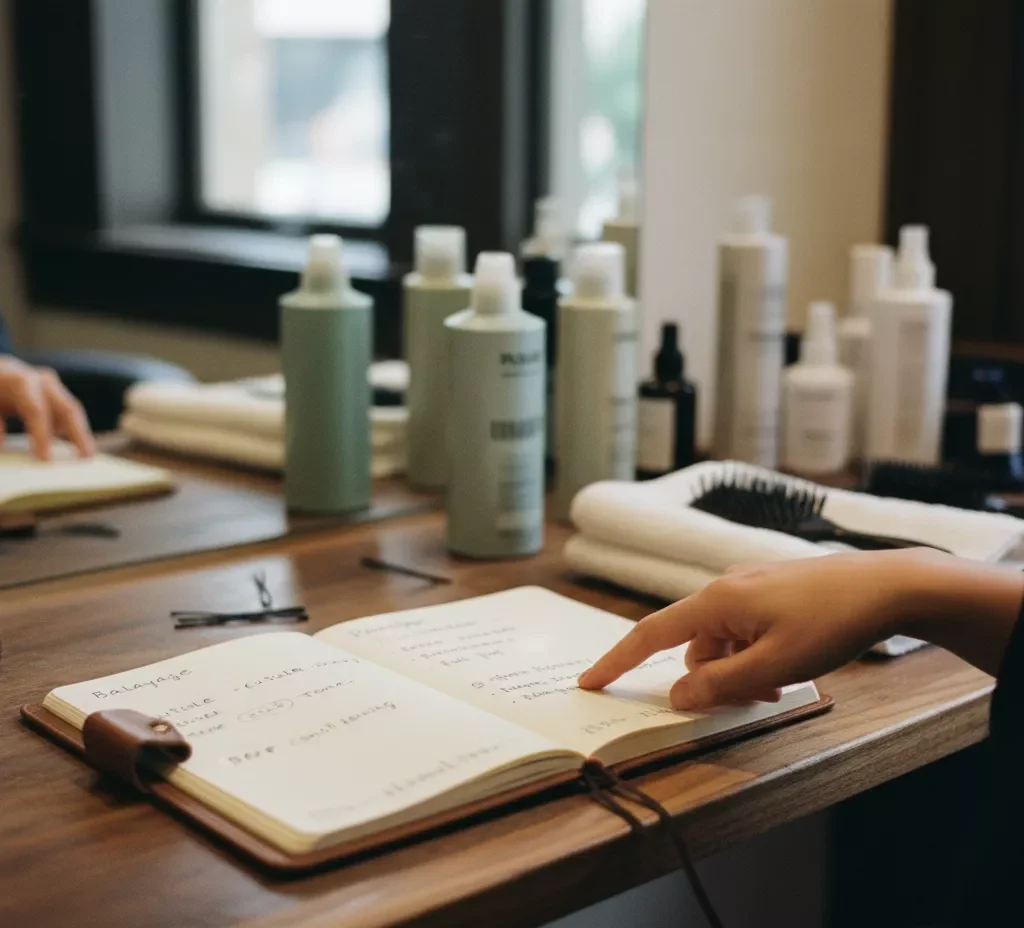
The beauty industry is projected to surpass $650 billion by 2025. Consumers are more informed, skeptical, and digitally savvy than ever. AI is reshaping personalization, while economic pressures are forcing brands to prove value. For beginners, the jargon can feel like a foreign language.
This glossary is your shortcut to confidence. Organized into four categories—Hair, Nails, Skin, and Mental Health—it gives you the vocabulary to navigate beauty with clarity.
Section 1: Hair
The global haircare market is growing steadily, with AI-driven personalization and sustainability leading innovation. Here are 10 terms every beginner should know:
- Balayage – A freehand hair-coloring technique for natural, sun-kissed highlights.
- Keratin Treatment – A smoothing process that reduces frizz and adds shine.
- Protective Styles – Braids, twists, or wigs designed to protect natural hair from damage.
- Hair Porosity – How well hair absorbs and retains moisture. High porosity often needs richer products.
- Heat Protectant – A spray or serum that shields hair from styling tools.
- Scalp Health – Treating the scalp like skin with scrubs, serums, and nourishing formulas to support stronger hair.
- Bond Builders – Products that repair broken hair bonds, popularized by salon treatments.
- Air-Dried Texture – Celebrating natural waves and curls, part of the low-maintenance trend.
- Hair Lamination – A glossing treatment that coats strands for a smooth, glass-like shine.
- Custom Color Analysis – AI-powered tools that recommend shades based on skin tone.
Mini Call To Action: Next time you see a stylist, ask: Am I choosing a trend, or am I choosing what works for my hair’s health?
Section 2: Nails
The nail industry is booming, with shorter lengths, shimmer, and minimalist luxury dominating the industry. Here are 10 terms to know:
- Cuticle Care – Essential for nail health; oils and creams prevent dryness.
- Gel Polish – Long-lasting polish cured under UV or LED light.
- Dip Powder – A durable alternative to gel, applied by dipping nails into colored powder.
- Press-Ons – High-quality, reusable nails that surged during the pandemic and remain popular.
- Chrome Nails – A reflective, metallic finish that creates a mirror-like effect.
- Aura Nails – Gradient nail art that mimics glowing energy fields.
- Velvet Nails – A shimmering finish that gives nails a plush, soft-focus look.
- Negative Space Design – Nail art that leaves parts of the natural nail visible.
- Nail Crowns – 3D embellishments for statement manicures.
- Russian Manicure – A precise cuticle-cleaning technique gaining traction.
Bold statement: Nails are no longer an accessory—they’re a status symbol.
Advertisement (more below)

Section 3: Skin
Skincare is the fastest-growing beauty category, with AI personalization and wellness integration leading the charge. Here are 10 foundational terms:
- Barrier Repair – Products designed to strengthen the skin’s natural defense and prevent irritation.
- Microbiome Skincare – Formulas that support healthy skin bacteria.
- Serum Stick – Portable, swipe-on serums for convenience.
- Biotech Ingredients – Lab-created activities like peptides and growth factors.
- Milky Toner – A creamy, hydrating toner that soothes and preps the skin.
- Peptide Lip Treatment – Targeted care for lips, up 48% in sales.
- SPF Hybrid – Sunscreens combined with skincare benefits.
- Slugging – Applying a thick occlusive layer (like petroleum jelly) to lock in moisture.
- Skin Cycling – Rotating active ingredients to avoid irritation.
- Blue Light Protection – Products claiming to shield against screen exposure.
Mini Call To Action: Are you buying skincare for results, or for the ritual? Consumers demand both.
Section 4: Mental Health and Beauty Standards
Beauty standards are not just cultural—they’re psychological. Studies show exposure to unrealistic beauty ideals increases risks of low self-esteem, body dissatisfaction, and anxiety. Here are 10 terms to help you understand the intersection of beauty and mental health:
- Body Dysmorphia – A mental health condition where individuals obsess over perceived flaws.
- Comparison Culture – The tendency to measure oneself against curated social media images.
- Digital Filters – Tools that alter appearance, often fueling unrealistic expectations.
- Self-Objectification – Viewing oneself primarily through the lens of appearance.
- Perfection Anxiety – Stress caused by striving for unattainable beauty ideals.
- Social Media Validation – The pursuit of likes and comments as a measure of worth.
- Inclusive Beauty – A movement challenging narrow standards by celebrating diversity.
- Authenticity Marketing – Brands promoting “real” beauty as a counter to perfection culture.
- Quiet Luxury Aesthetic – Minimalist beauty that signals refinement through subtle, understated choices.
- Resilience Practices – Mindset and wellness routines that protect against beauty-related stress.
Bold statement: The most powerful beauty trend is not a product—it’s mental resilience.
Final Word
You now have the vocabulary to navigate hair, nails, skin, and the mental health impact of beauty standards. But knowledge is only the first step. The real power comes when you use these terms to make smarter purchases, demand inclusivity, and protect your mental well-being.
Call To Action: Bookmark this glossary. Share it with a friend. And the next time you scroll past a beauty ad, ask yourself: Am I seeing reality, or am I seeing a standard designed to sell me something?
Because the most beautiful thing you can wear is confidence backed by knowledge.