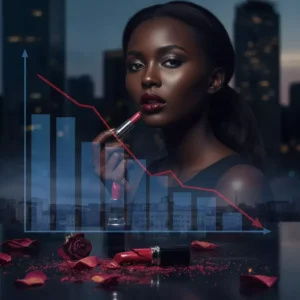
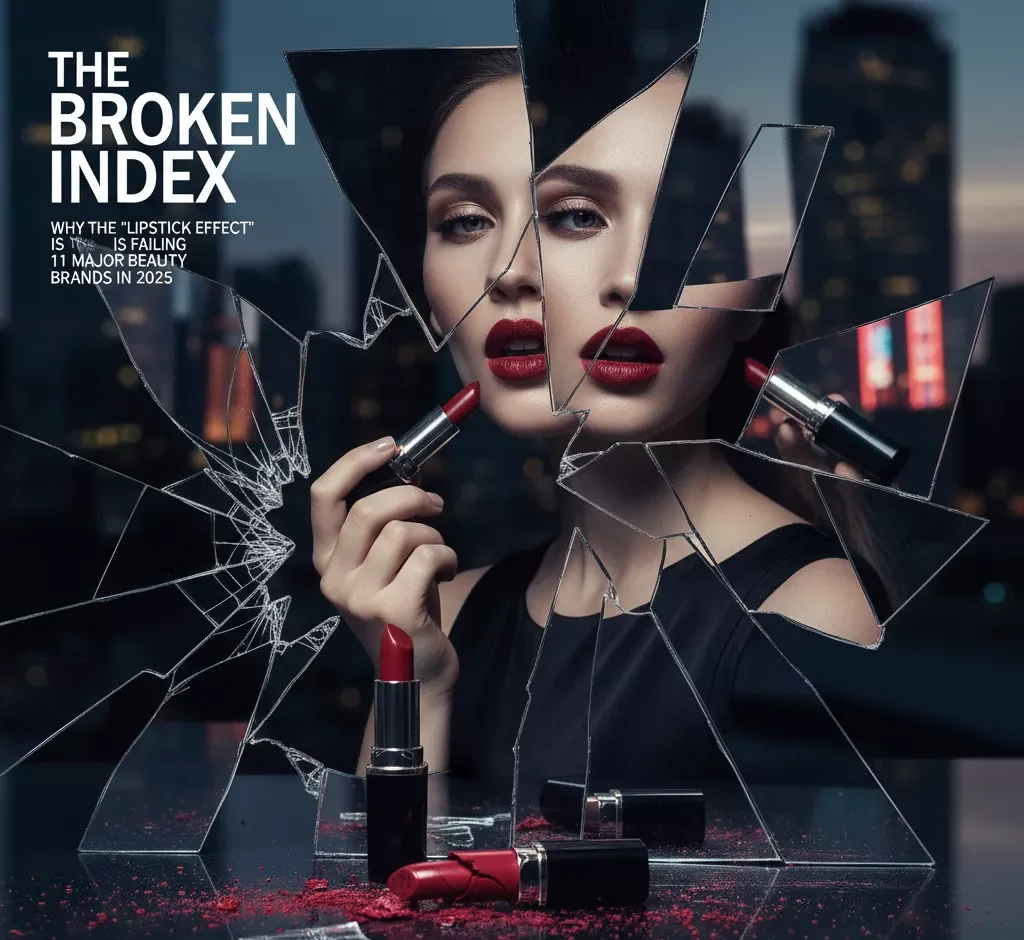
The beauty industry has long clung to a comforting economic theory: the Lipstick Index. Coined during the 2001 recession, the theory stated that even in tough times, consumers would trade down from big luxuries to small, affordable indulgences like a premium lipstick. In 2025, amidst persistent inflation, supply chain pressures, and shifting consumer values, this historic indicator is faltering, signaling deeper trouble for major conglomerates.
The struggles of brands like MAC Cosmetics and the confirmed closures of niche players prove that being an “affordable luxury” is no longer enough. The new mandate is “Affordable Efficacy” and “Authentic Value.”
Here is a breakdown of the evolving consumer psyche and the 11 brands caught in the crosscurrents of a new economic reality.
1. The Death of the Impulse Buy: Scrutiny Replaces Splurge
The core failure of the Lipstick Index in 2025 is the end of the unexamined impulse purchase. Consumers are financially cautious but also digitally empowered.
A. The “Dupe” Economy and Price Sensitivity
The rise of platforms like TikTok has codified the “dupe” culture, teaching consumers to prioritize value over brand loyalty.
- Impact on Prestige: Major legacy brands, including MAC Cosmetics and Clinique, have suffered as consumers can easily find high-quality alternatives for their hero products at a fraction of the cost. The perceived value of the brand name alone is no longer enough to justify the price hike.
- The Winner: This trend favors agile, value-first brands like e.l.f. Beauty and private-label masstige lines, which can turn trends into low-cost, high-quality products faster than the conglomerates.
B. Substitution to Efficacy: The Rise of the “Skincare Index”
Consumers are still spending on beauty, but they are reallocating their affordable luxury budget to products that promise a tangible ROI (Return on Investment) for their health and appearance.
- The New Indulgence: The resilient spending is shifting towards dermocosmetics, facial serums, and peptide lip treatments. This signals that money is being spent on items viewed as necessary self-care with clinical benefits, not just superficial color.
- Case Study: Coty’s Mass Brands: Brands like CoverGirl and Rimmel are struggling because their core color cosmetics category is being outpaced by this functional shift. They are failing to capture the spend that is now dedicated to high-performance base makeup and skincare hybrids.
2. Supply Chain Pressure and the China Downturn
For global conglomerates, the financial struggles in 2025 are less about domestic shopping trends and more about severe macroeconomic headwinds.
A. The Asia-Pacific Slump
The performance of large players like Estée Lauder Companies (parent of MAC and Clinique) and Shiseido has been directly tied to a sharp decline in key regions.
- China’s Caution: The slowdown in Mainland China’s economy has made consumers more cautious about luxury spending.
- Travel Retail Collapse: The collapse of the high-margin Asian travel retail sector (airport duty-free shops) has hit Estée Lauder and Shiseido particularly hard. These companies have had to pull back on inventory (destocking), which results in massive revenue losses.
B. Inflation and Operational Costs
Legacy companies face higher costs for raw materials, labor, and logistics. Because the consumer is simultaneously highly price-sensitive, companies cannot pass along all those costs without losing sales volume.
- The Squeeze: This creates a severe margin squeeze for the parent companies of mass brands like Coty, forcing them to undertake costly restructuring plans to survive.
3. The Saturated Market: Why Niche Brands Are Folding
Advertisement (more below)

The high-volume, low-margin nature of the current market is proving fatal for many independent and celebrity-backed brands that lack a robust financial engine.
The confirmed closures and discontinuations highlight the ruthless nature of market saturation:
| Brand Struggle | Category & Challenge | Financial Outcome |
| Flower Beauty | Celebrity-backed mass cosmetics | Closure. Failed to justify its shelf space against cheaper, more relevant rivals. |
| REN Clean Skincare | Niche “Clean Beauty” skincare | Discontinued by Unilever. Failed to sustain growth and was cut during corporate streamlining. |
| Ami Colé | Independent, inclusive makeup | Closure. Could not overcome high customer acquisition costs in the volatile digital space. |
| Jecca Blac | Vegan, gender-free makeup | Closure. Failed to scale beyond a niche audience in a crowded values-driven market. |
| Apostrophe Skincare | Health-tech/Dermatology | Shut down/Consolidated. Parent company chose to eliminate the distinct brand to streamline operations and debt. |
| Futurewise Skincare | Trend-driven skincare (“Slugging”) | Closure. A viral concept proved unsustainable without a deeply rooted business model. |
The New Beauty Index: Agility and Authenticity
The struggles of these 11 beauty brands are not signs of a failing industry, but of one undergoing a violent, necessary correction. The new indicator for success is no longer lipstick sales, but brand agility and supply chain excellence.
For beauty professionals, this landscape creates a massive opportunity: consumers are seeking genuine expertise and are more willing to invest in licensed services that offer transformative results, exactly what the new retail market is failing to deliver.
Advertisement (more below)